
CCIT & Residue Testing Partnership: Long-Term Support Terms
CCIT & Residue Testing Partnership: Long-Term Support Terms
A long-term CCIT and residue testing partnership is settled less by the quotation than by three documents: a locked instrument configuration, an acceptance clause the laboratory can actually inspect against, and a support path that survives staff turnover and method revision. For food safety and pharmaceutical analysis testing laboratories moving from decision into execution, these three items determine whether the instrument still produces defensible data in its third year.
This guide works through the verifiable configuration facts of two instrument families used daily in that work — the C690 container closure integrity system and the C840 automated evaporation residue system — and shows what to fix before an order, what to write into acceptance criteria, and what belongs in the long-term support conversation. Labthink Food & Pharmaceutical Testing Solutions is the food and pharmaceutical testing portfolio of Labthink Instruments Co. Ltd., a packaging-material testing instrument manufacturer founded in 1989 and based at 144 Wuyingshan Road, Jinan, China.
One boundary applies throughout. Regulatory limits and instrument specifications are different kinds of facts. A migration limit tells a laboratory what result is acceptable; it says nothing about whether a particular instrument configuration can reach that result. Keeping the two separate is what makes a partnership clause enforceable rather than decorative.
What a Long-Term Testing Partnership Actually Covers
A long-term testing partnership is an agreement that configuration, acceptance evidence and support obligation are all defined before payment and stay valid afterwards. It is not a framework purchasing contract and it does not require a multi-unit order. The same three-part structure applies to a laboratory buying its first CCIT instrument and to a contract research organisation adding a fifth residue station.
The first part is configuration lock. For a leak tester, that means the list of package formats the laboratory actually tests, the fixture set that matches them, and the method — pressure decay, vacuum decay or a model that supports both. For a residue system, it means the sample types, the required balance readability and the number of testing positions. Configuration that is assumed rather than written down becomes the most common source of post-delivery disagreement.
The second part is acceptance evidence. The stated basis for these instruments is a pre-shipment factory test before delivery, with the option of inspection after the goods arrive. That is a workable frame, but only if both sides agree in advance on which representative packages or samples will be used, who witnesses the test, and which records travel with the shipment.
The third part is support continuity. Instruments outlive the technician who ran the demo. A support path that names a service contact, defines what a fixture addition requires, and states how configuration changes are quoted keeps the installed instrument aligned with a changing package portfolio.
Industry Background: Why These Instruments Are Bought as Multi-Year Assets
Regulatory pressure explains why laboratories treat CCIT and residue instruments as long-life assets rather than consumables. The European Commission states that plastic food contact materials are subject to an overall migration limit of 60 mg/kg food or 10 mg/dm² of contact material, and that migration testing uses simulants under standardised time and temperature conditions representative of a given food use, covering the maximum shelf life of the packed food. In the United States, the FDA maintains a Food Traceability List identifying foods subject to additional recordkeeping under the Food Safety Modernization Act.
Those facts define the analytical target, not the instrument. What they change for a buyer is the cost of an unstable method: if a residue result has to be reproducible across batches, analysts and audit cycles, then the evaporation, drying and weighing steps have to be controlled the same way each time. That is exactly the part a manual workflow leaves to technique.
On the pharmaceutical side, the same logic runs through container closure integrity. USP <1207> emphasises deterministic, quantitative and non-destructive leak test methods over probabilistic approaches such as blue dye ingress, and it calls for validation of the limit of detection, system suitability, and confirmation that the method can detect leaks down to a defined maximum allowable leakage limit. A laboratory that has to re-validate a method on a new instrument every few years carries a cost that never appears on the purchase order.
Buyer reading of the background: the regulation fixes the limit and the recordkeeping duty. The instrument has to deliver repeatable measurement against that limit. Conflating the two is how laboratories end up accepting a machine that meets a datasheet but not their method.
C690 CCIT: The Configuration Facts to Lock Before an Order
The C690 is a Container Closure Integrity Testing system used to detect leaks in pharmaceutical, food and other sealed packages. It uses non-destructive leak detection, so tested packages remain intact after testing, and the series can use pressure decay and/or vacuum decay methods depending on the model. It can be applied to vials, ampoules, syringes, bottles, pouches, sachets and other package formats, subject to the package configuration and a suitable fixture.
That flexibility is the reason a C690 order should not be placed from a catalogue description alone. Six inputs decide the fixture and the test configuration, and each of them is a buyer-side fact the supplier cannot infer:
- Package dimensions. Height, diameter and wall geometry determine whether a chamber or fixture can accept the item and how the test volume behaves.
- Closure configuration. A screw cap, a crimped vial, a welded pouch seam and a heat-sealed sachet fail in different places, so the fixture has to expose the right region.
- Test pressure. Pressure decay requires a package that can be internally pressurised; vacuum decay places the item in a sealed chamber and monitors the chamber. The applicable setpoint has to be confirmed for the specific pack.
- Required sensitivity. The detection target should come from the method and the maximum allowable leakage limit, not from a generic figure.
- Fixtures. Each distinct package format normally needs its own fixture, so a laboratory with a mixed portfolio should list every format at the quotation stage.
- Matched vacuum pump. The vacuum decay application lists a matched vacuum pump as supporting equipment, which means the pump is part of the delivered configuration rather than an afterthought.
The installation condition completes the list. The application is specified for indoor laboratory use only, in a stable ambient temperature. A laboratory planning to place the instrument beside a loading bay or in a room with a fluctuating HVAC schedule should resolve that before shipment, not after.
Choosing between pressure decay and vacuum decay
The appropriate method depends on the package type, material, geometry, closure design, required detection sensitivity and the applicable standard. Pressure decay is generally suited to packages that can be internally pressurised, such as sealed rigid containers, valves or closed tubing assemblies. Vacuum decay is used for rigid, semi-rigid and flexible nonporous packages such as pouches, trays and vials, where internal pressurisation is not feasible or could compromise the package. Labthink can recommend the C690 configuration on the basis of the specific package and testing requirement.
The C690 supports vacuum decay testing for non-destructive package leak detection based on the ASTM F2338 test method, applicable to rigid, semi-rigid and flexible nonporous packages subject to the specific package configuration. Where USP <1207> is the governing expectation, the discussion should move from “which method” to “what limit of detection has been demonstrated for this pack on this fixture.”
What sensitivity means in a partnership conversation
Method class matters before any number does. Labthink's comparison material describes probabilistic bubble emission and dye penetration methods as relying on human observation and evaluation of likelihood, while vacuum decay produces quantifiable, science-based data. The same comparison cites detection limits of 2 µm for the deterministic method against 50 µm for the probabilistic methods.
Those figures describe method classes, not a guaranteed performance value for every package. A buyer should read them as a reason to require documented sensitivity for the actual pack, and should ask for the reference standard or calibrated orifice used to demonstrate it, consistent with the calibration expectations in ASTM F2338.
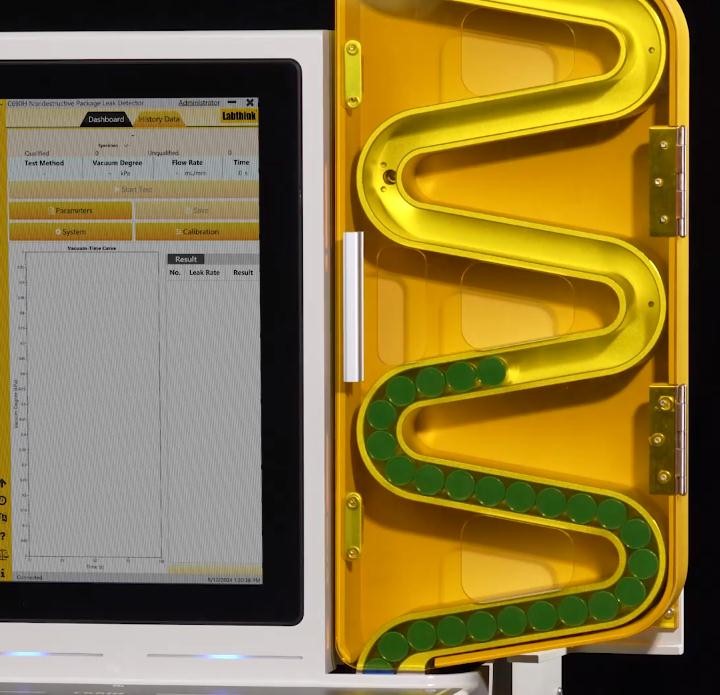
C690 CCIT units in a batch configuration. Long-term supply terms should state which package formats the delivered fixture set covers.
Step-by-Step: Confirming a C690 Configuration and Terms
A confirmable order follows a sequence rather than a single email. The steps below keep the technical decision and the commercial decision separate, which is what allows each to be checked later.
- Build the package list. Record every format the laboratory expects to test over the next two to three years, with dimensions, material and closure type. Include the formats that are still in development, marked as such.
- Assign a method per format. Mark each item as pressure decay, vacuum decay or undecided. Undecided items are the ones most likely to need a sample test.
- Set the sensitivity target. Derive the required detection level from the applicable method and the maximum allowable leakage limit, and state it in the request rather than accepting a default.
- Map fixtures to formats. A one-to-one list prevents the common gap where the instrument arrives with one fixture and the laboratory has four package types.
- Confirm the matched vacuum pump and utilities. Treat the pump, power supply and bench space as part of the configuration, not as local procurement.
- Confirm the room. Indoor laboratory use, stable ambient temperature. Record the measured temperature range of the intended room.
- Agree the acceptance evidence. Name the representative packages, the witness, and the records to be delivered: pre-shipment test results, fixture list, and inspection points for receipt.
- Fix the commercial terms in writing. Minimum order quantity, trade term and payment basis, as set out in the section below.
For sachets containing food or meat products, suitability depends on the sachet dimensions, material and required leak detection sensitivity, and package information and samples may be required to confirm the testing configuration. That is not a limitation of the instrument so much as a description of how much of the answer belongs to the buyer's package.
C840: Automation for Evaporation Residue, Non-Volatile Residue and Overall Migration
The C840 is an automated system designed for evaporation residue and non-volatile residue testing. It integrates evaporation, drying and weighing processes to reduce manual operations and improve testing consistency, and it supports overall migration testing by automating the key evaporation, drying and weighing procedures involved.
Its declared applications cover four related but distinct determinations: chemical reagent residues after evaporation, total migration testing of food contact materials, non-volatile matters in purified water, and non-volatile residual testing of pharmaceutical packaging materials. For a laboratory running both food contact and pharmaceutical packaging work, that overlap is the practical argument for a single automated platform — the same physical steps serve all four methods.
Where the automation changes the risk profile
Manual residue work carries risks that are operational before they are analytical. Transferring cups between hot baths, desiccators and separate analytical balances exposes micro-gram balances to ambient temperature and humidity fluctuation; differences in technician technique and timing introduce variation across shifts; and manual pouring and evaporation increase exposure to hot or volatile solvents. An enclosed, automated workflow addresses each of those points by keeping the weighing environment stable and the handling inside the system.
Labthink's comparison material states an 80% to 95% reduction in hands-on time per batch for the automated approach, and describes an integrated testing system with up to 25 stations in a single unit, a robotic cup-gripper and a physical separation between the heating chamber and the balance chamber. Those are manufacturer-stated figures. Their value to a buyer is directional: they indicate where the labour hours go, not a promise about a specific laboratory's throughput.
C840M or C840H
The two configurations differ mainly in balance readability and testing capacity. C840M uses a 0.1 mg readability balance; C840H uses a 0.01 mg readability balance and offers higher testing capacity and a greater number of testing positions. The choice follows the specification the laboratory must meet: standard quality control work where 0.1 mg readability satisfies the method points to C840M, while high-precision development work or high-volume regulated testing points to C840H.
Sample preparation, sample quantity, heating conditions and constant-weight requirements should be confirmed against the applicable method in every case. The C840 can be considered for evaporation residue testing of aqueous solutions and similar samples, including silica slurry aqueous solutions, with those conditions agreed per method rather than assumed.
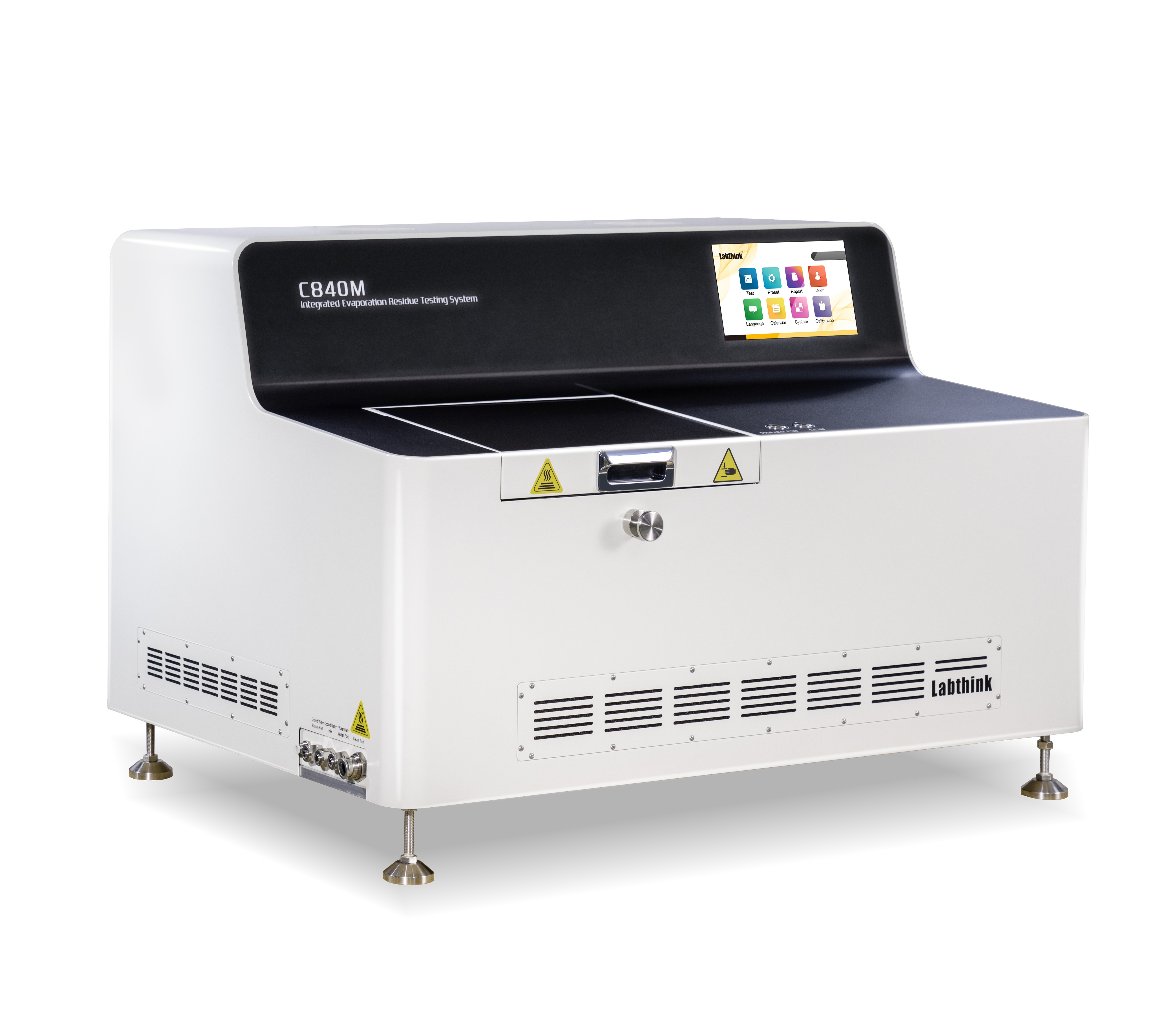
C840 automated evaporation residue system. Balance readability and testing positions are the two configuration choices that should be fixed before order.
Purchasing Terms and Acceptance Criteria
The stated purchasing basis is deliberately simple: minimum order quantity of 1 unit; delivery terms of EXW, FOB, CIP, CPT, DAT or DAP; acceptance by pre-shipment test and inspection upon receipt; payment terms negotiable. For a laboratory buying a single instrument, that combination removes the volume barrier that often pushes small facilities toward used or unspecified equipment.
What the terms do not do by themselves is define what “inspection upon receipt” means. That has to be written down. A workable acceptance clause for a CCIT or residue instrument covers four things:
- Configuration verification. The delivered fixture list is checked line by line against the formats confirmed at order, and the matched vacuum pump or balance module is present and identified.
- Functional demonstration. A representative package or sample from the laboratory's own production is run at receipt, using the method and setpoints agreed during configuration.
- Documentation set. Pre-shipment test records, the fixture and accessory list, and the operating documentation are handed over together, so the receipt inspection has something to check against.
- Deviation route. A named contact and a stated response path for anything that does not match, agreed before shipment rather than discovered afterwards.
Selection parameters that belong in the same conversation include testing accuracy, test items, sample specification, power supply and calibration standard. These are the fields where a mismatch is expensive to correct later, because they usually require a fixture, a method change or a site modification rather than a software setting.
Where the laboratory operates under GMP expectations and needs traceable data records, that requirement should be raised during configuration so the data-handling expectation is confirmed against the specific model rather than assumed from a family description.
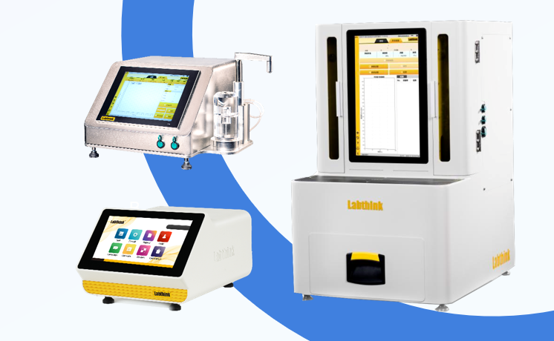
Non-destructive CCIT principle. Acceptance testing should reproduce the method and setpoints agreed during configuration, using the buyer's own package.
Use Cases: Where Long-Term Support Earns Its Place
Three buyer situations show why the support terms matter as much as the specification.
A pharmaceutical fill-finish line running vials, ampoules and syringes needs one CCIT platform across three container types. The long-term question is not whether the C690 can test them — it is designed for pharmaceutical packages such as vials, ampoules and syringes — but whether the fixture set and the validated detection limit stay documented when a new vial size is introduced two years later.
A food contact material laboratory working to overall migration limits needs reproducible gravimetric determination across simulants. The relevant partnership element is the constant-weight definition and the heating programme, because those are what an auditor will ask to see when a result sits close to the 10 mg/dm² or 60 mg/kg limit.
A testing, inspection and certification laboratory serves multiple clients with different package formats. Here configuration planning is the whole game: a fixture roadmap agreed at order avoids repeated single-fixture purchases, and a documented acceptance record per client method supports the laboratory's own accreditation scope.
Confirmation Checklist: C690 and C840 Side by Side
| Item to confirm before order | C690 container closure integrity system | C840 automated residue system |
|---|---|---|
| Primary purpose | Non-destructive leak detection in pharmaceutical, food and other sealed packages | Automated evaporation residue, non-volatile residue and overall migration testing |
| Method basis | Pressure decay and/or vacuum decay, depending on model | Integrated evaporation, drying and gravimetric weighing |
| Buyer inputs required | Package dimensions, closure configuration, test pressure, required sensitivity, fixture list | Sample type, sample quantity, heating conditions, constant-weight requirement |
| Resolution or sensitivity decision | Detection limit demonstrated against the maximum allowable leakage limit for the pack | Balance readability: 0.1 mg for C840M, 0.01 mg for C840H |
| Supporting equipment | Matched vacuum pump | Integrated weighing module; number of testing positions varies by model |
| Site condition | Indoor laboratory use only; stable ambient temperature | Indoor laboratory use only; stable ambient temperature |
| Stated acceptance basis | Pre-shipment test; inspection upon receipt | Pre-shipment test; inspection upon receipt |
The table is a discussion agenda, not a specification sheet. Every row on it should end with a written value in the order documentation, because a row left as “to be confirmed” is the row that produces a dispute.
Frequently Asked Questions
Which standards are relevant when configuring a C690 or C840 order?
For CCIT, the C690 supports vacuum decay testing for non-destructive package leak detection based on the ASTM F2338 test method, and it is designed for non-destructive container closure integrity testing consistent with USP <1207> expectations, using pressure decay or vacuum decay depending on the application. For residue work, the C840 can be used for applications related to standards such as EN 1186 and EU 10/2011, depending on the specific test and sample type. The applicable monograph or standard should be named in the order documentation so the configuration is checked against it rather than against a general capability statement.
Is the C690 destructive, and which packages can it actually test?
The C690 uses non-destructive leak detection methods, so tested packages remain intact after testing. It can be used for various sealed packages, including vials, ampoules, syringes, bottles, pouches, sachets and other package formats, depending on the package configuration and a suitable fixture. For bottles specifically, the bottle dimensions, closure configuration, test pressure and required sensitivity should be confirmed in order to determine the appropriate fixture and test configuration. For sachets containing food or meat products, suitability depends on the sachet dimensions, material and required leak detection sensitivity, and package information and samples may be required to confirm the configuration.
Can the C840 replace manual evaporation residue testing?
The C840 is designed to automate key steps of the evaporation residue testing process, helping improve testing efficiency, consistency and repeatability compared with manual procedures. It should be understood as automating the evaporation, drying and weighing sequence rather than replacing the method itself: sample preparation, sample quantity, heating conditions and constant-weight requirements still have to be confirmed according to the applicable method before the instrument is configured.
Can the C840 handle overall migration and non-volatile residue work as well as evaporation residue?
Yes. The C840 is designed to support overall migration testing by automating key evaporation, drying, weighing and related testing procedures, and its declared applications include total migration testing of food contact materials, non-volatile matters in purified water, non-volatile residual testing of pharmaceutical packaging materials, and evaporation residues of chemical reagents after evaporation. Overall migration testing typically involves exposing the material to a food simulant under specified time and temperature conditions, then evaporating the simulant and determining the residue, which is the sequence the system automates.
What are the purchasing terms for these instruments?
The stated terms are a minimum order quantity of 1 unit, delivery under EXW, FOB, CIP, CPT, DAT or DAP, acceptance based on pre-shipment test and inspection upon receipt, and payment terms that are negotiable. Because the minimum order quantity is one unit, a single-laboratory purchase can be structured with the same trade-term options as a larger order, and the acceptance basis can be agreed in writing before shipment.
What information should a laboratory send before an order is confirmed?
For a CCIT instrument, send the package list with dimensions, material and closure type, the required leak detection sensitivity, the intended method, and any samples of the actual packs so the fixture can be confirmed. For a residue system, send the sample types, the applicable method and standard, the required balance readability, the expected number of samples per batch, and the constant-weight requirement. For both, add the site conditions: indoor laboratory location, measured ambient temperature range, power supply and calibration standard.
How should acceptance criteria be prepared, and what is the next practical step?
Acceptance should combine a pre-shipment factory test with an inspection on receipt, and both should reference the configuration confirmed at order: the fixture list, the matched vacuum pump or weighing module, the method and setpoints, and the documentation set. Preparing a representative sample or package for the pre-shipment test is the single most useful thing a laboratory can do, because it converts the acceptance clause from a formality into a demonstration. Laboratories that want to test this before committing to terms can request a configuration review and a representative sample evaluation as the first step.
Conclusion
A CCIT and residue testing partnership holds up when three things are written down rather than assumed: the package or sample list that defines the configuration, the acceptance evidence that both sides will check against, and the support route for the fixture or method change that will certainly come. The C690 makes that concrete through six confirmable inputs — dimensions, closure configuration, test pressure, required sensitivity, fixtures and the matched vacuum pump — inside an indoor laboratory with stable ambient temperature. The C840 makes it concrete through balance readability, testing positions and the constant-weight requirement that governs evaporation residue, non-volatile residue and overall migration work alike.
The commercial terms are deliberately accessible: one unit minimum, six standard trade terms, pre-shipment testing with inspection on receipt, and negotiable payment. The work that remains is the buyer's own: state the formats, state the sensitivity target, state the method, and confirm the room.
For laboratories that want the full instrument and service context before finalising terms, the Labthink packaging testing equipment and testing services brochure covers the wider instrument range, and the Labthink team can review a package list against a proposed C690 or C840 configuration ahead of order.
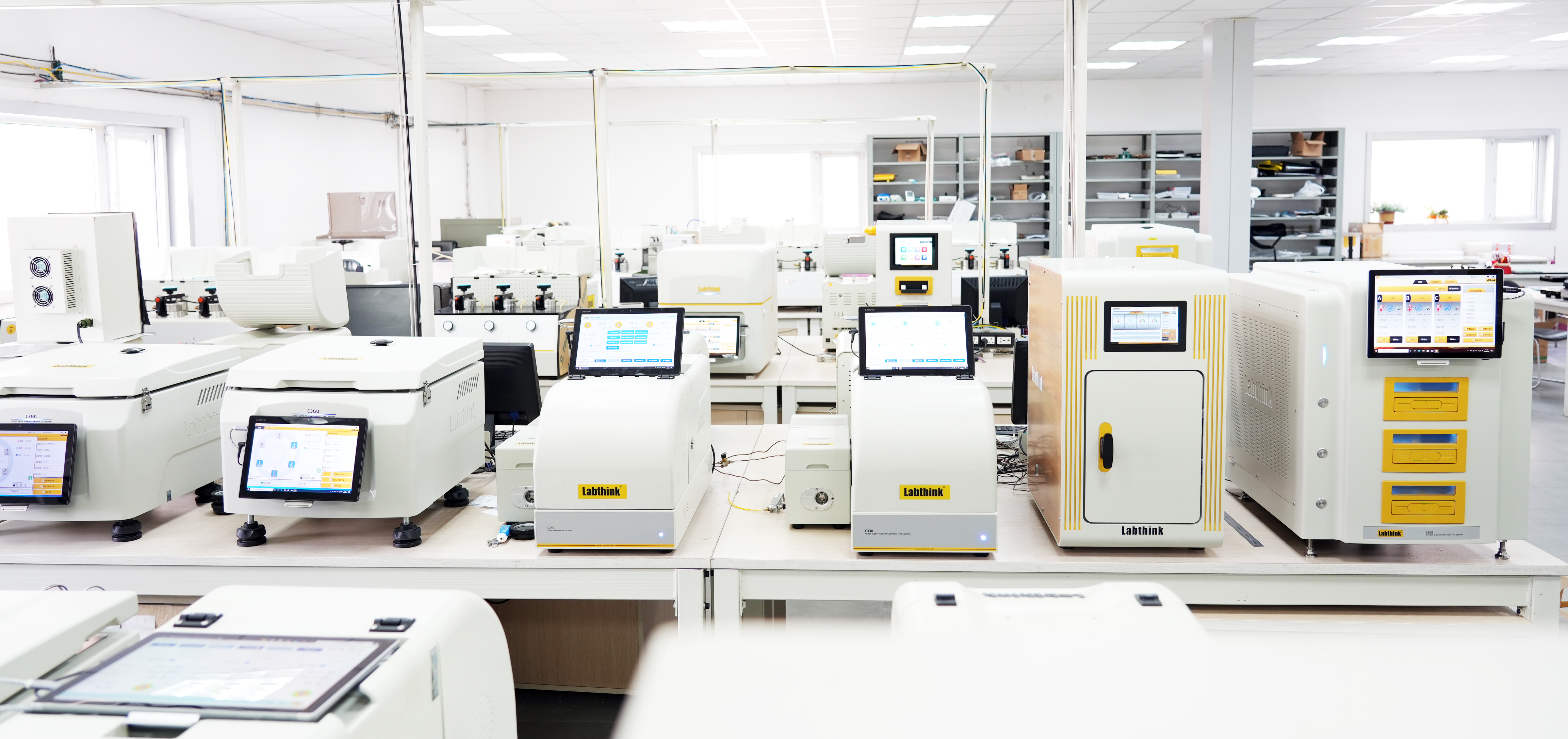
Method confirmation before order: a representative package and a documented setpoint list shorten acceptance on receipt.
Have Questions or Need More Details?
Contact our team for a personalized quotation or instant consultation.
Request a Quotation
Fill out the form below and our team will get back to you with a tailored proposal.
WhatsApp Direct Chat
Prefer to chat in real-time? Message us on WhatsApp for instant assistance & quick answers.
- Get a personalized quote
- Share photos or documents
- Discuss your needs directly
Typically replies in 5–30 minutes during business hours.