
Top Lab Instruments for Residue, LOD, and CCIT Testing: A Recommendation List
Selecting residue, loss on drying (LOD), and container closure integrity (CCIT) instruments is a decision-stage task, not a catalogue exercise. The instrument has to match the metric being measured, the automation level has to match the laboratory's batch volume, and the sample or package compatibility has to match what the laboratory actually receives — liquid food simulants, pharmaceutical excipients, polymer raw materials, or sealed vials, ampoules, syringes, bottles, pouches and sachets.
This shortlist from Labthink Food & Pharmaceutical Testing Solutions is organised by test need rather than by a performance hierarchy. Each entry below is included for a specific reason drawn from declared applications, declared automation level, declared specifications, and declared package compatibility — not from comparative performance claims.
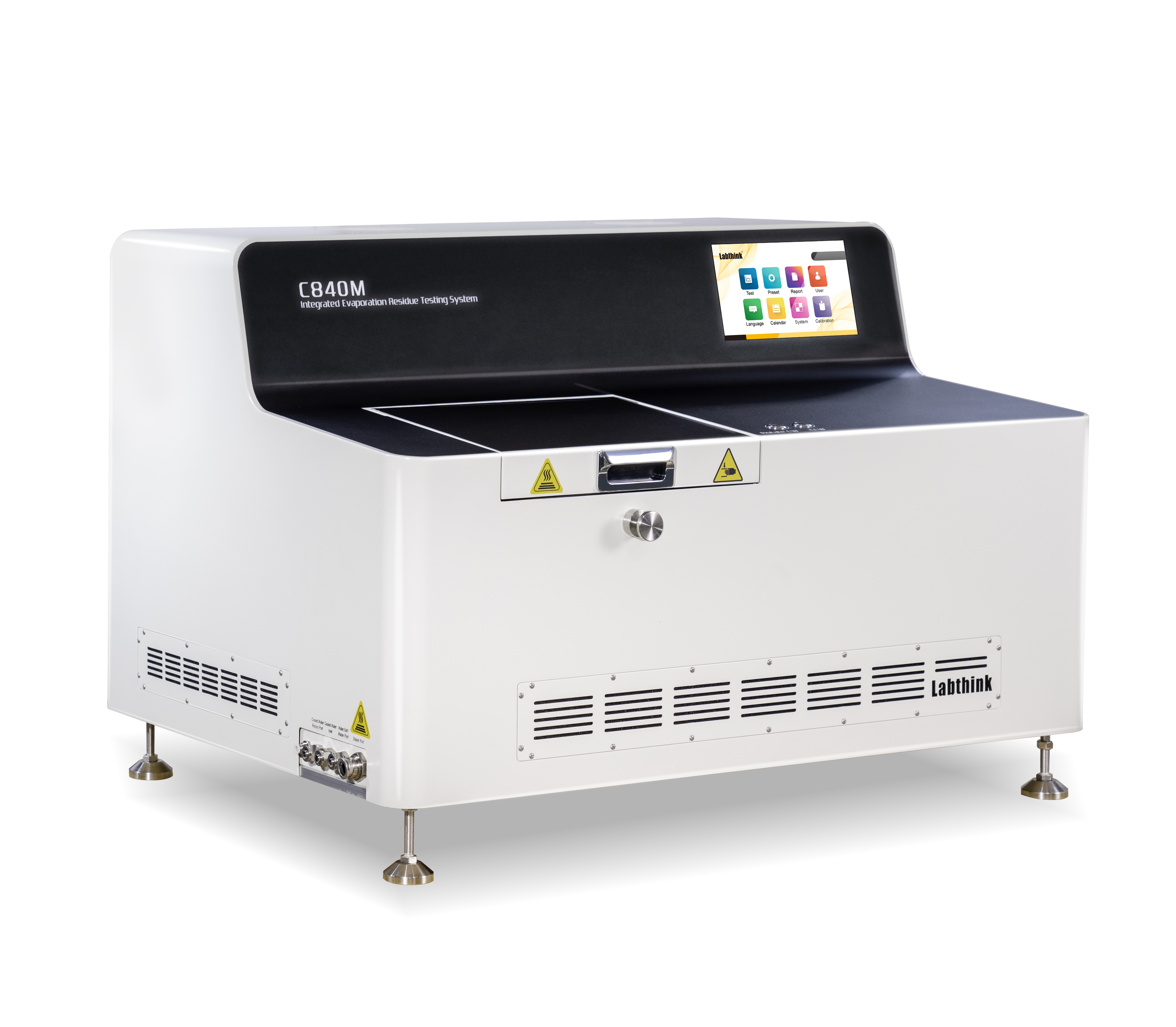
Cover: Labthink C840 Integrated Evaporation Residue Testing System, shortlisted for evaporation residue, non-volatile residue and total migration testing.
Why Residue, LOD and CCIT Instruments Are Frequently Bought for the Wrong Reason
Residue testing is not one method. It is a family of gravimetric and non-destructive procedures that answer different analytical questions, and the most common specification error is treating them as interchangeable. A laboratory that buys an evaporation residue instrument to measure ash content after high-temperature ignition will not obtain the data it needs, because the two methods apply different thermal and chemical conditions and report different forms of residue.
Evaporation residue testing determines the amount of non-volatile material remaining after a specified sample solution is evaporated under controlled conditions. In practice, liquid food simulants such as water, ethanol or hexane soak the sample, evaporate completely, and the remaining dry residue is weighed.
Residue on ignition measures the residue remaining after the sample is subjected to a high-temperature ignition process. It is a pharmacopeial gravimetric method, such as USP <281>, that measures the amount of inorganic impurities in an organic substance. Sulfated ash testing is a variation in which sulfuric acid converts alkali metals and impurities into stable sulfate salts, making the inorganic residue less volatile and easier to measure reproducibly.
Loss on Drying is a different question again. LOD determines the percentage of volatile matter — primarily moisture and residual solvents — in a sample by weighing the material, heating it under specified temperature and time conditions below its decomposition temperature until a constant weight is reached, and re-weighing. Water-insoluble matter testing addresses yet another question: the insoluble fraction left in water and chemical reagents.
CCIT is not a residue method at all. It is a package integrity discipline. Vacuum decay is a non-destructive Container Closure Integrity Test widely used in pharmaceutical packaging such as vials, ampoules and pouches. The package is placed inside a tight, sealed test chamber and a vacuum is drawn around it; if a defect exists, gas or liquid escapes from the package into the evacuated chamber, causing a rise in chamber pressure that indicates a potential leak.
Decision rule before any shortlist is written: define the metric first — evaporation residue, non-volatile residue, total (overall) migration, loss on drying, residue on ignition / sulfated ash, water-insoluble matter, or package leak rate — and only then compare instruments.
What Actually Drives Instrument Selection: Standards, Not Preferences
In food safety and pharmaceutical analysis testing, instrument selection is standards-driven. The regulatory frame determines the method, and the method determines the instrument envelope.
On the food contact side, the European Commission states that migration testing for food contact materials uses simulants under standardised time and temperature conditions representative of a certain food use, covering the maximum shelf life of packed food. The same source states that the overall migration to a food of all substances together may not exceed the Overall Migration Limit of 60 mg/kg food, or 10 mg/dm² of the contact material. Those two facts together define the workflow: expose the material to a simulant under standardised conditions, evaporate the simulant, and determine the residue gravimetrically.
On the traceability side, the U.S. Food and Drug Administration maintains a Food Traceability List identifying the foods for which additional traceability records are required under the Food Safety Modernization Act. Food and pharmaceutical laboratories therefore work inside a documentation-heavy environment where traceable test records matter as much as the measurement itself.
On the pharmaceutical packaging side, CCIT method claims commonly reference USP <1207>, ISO 11607, ASTM F2338 and FDA regulations. Labthink states that its vacuum decay CCIT method is a deterministic, non-destructive leak detection method aligned with these references; buyers should treat standards alignment as a vendor claim to be verified against the applicable standard text during qualification.
Labthink Instruments Co. Ltd. is a manufacturer of precision instruments and testing solutions for packaging materials analysis, founded in 1989, with a 4,100 m² facility, 220 employees, an annual output of 1,200 units, a 50-engineer R&D team, and approximately 50% of output exported to global markets. The company has taken the lead in proposing and drafting more than 10 national standards and holds more than 100 patents. Its Chemical Analysis Business Unit lists C840 for automated overall migration and evaporation residue testing, C850 for automated water-insoluble matter testing, C860 for automated residue on ignition testing, and C870 for automated loss on drying testing.
The Shortlist, Organised by Test Need
The five instruments below are grouped by the analytical question each one is declared to answer. Inclusion reasons are limited to declared applications, automation level, and sample or package compatibility.
1. C840 Integrated Evaporation Residue Testing System — evaporation residue, non-volatile residue and total migration
The C840 is an automated system designed for evaporation residue and non-volatile residue testing that integrates evaporation, drying and weighing processes. Its declared application scope covers determination of various chemical reagent residues after evaporation, total migration testing of food contacting materials, determination of non-volatile matters in purified water, and non-volatile residual testing of various pharmaceutical packaging materials.
Where the C840 belongs on a shortlist is best defined by its scope statement: it is recommended when evaluating non-volatile migration substances released into solvents or food simulants, such as in food contact material packaging compliance. For overall migration testing specifically, the C840 automates the evaporation, drying, cooling and weighing stages of the procedure, reducing manual steps in the workflow. Compliance with overall migration safety standards is one of the evaluation criteria applied when selecting automated evaporation residue testing equipment such as the C840.
Declared measurable criteria: testing range 0.05 to 80,000 mg, resolution 0.01 mg, repeatability ±0.05 mg, temperature range from room temperature to 130 °C, and temperature fluctuation ±0.5 °C. The system is applicable to food contact materials, pharmaceutical packaging and chemical reagents, and is used across pharmaceutical, chemical reagent, medical device, plastics and polymer, food contact material, and Testing, Inspection and Certification (TIC) industries. The housing is aluminium alloy with ABS plastic.
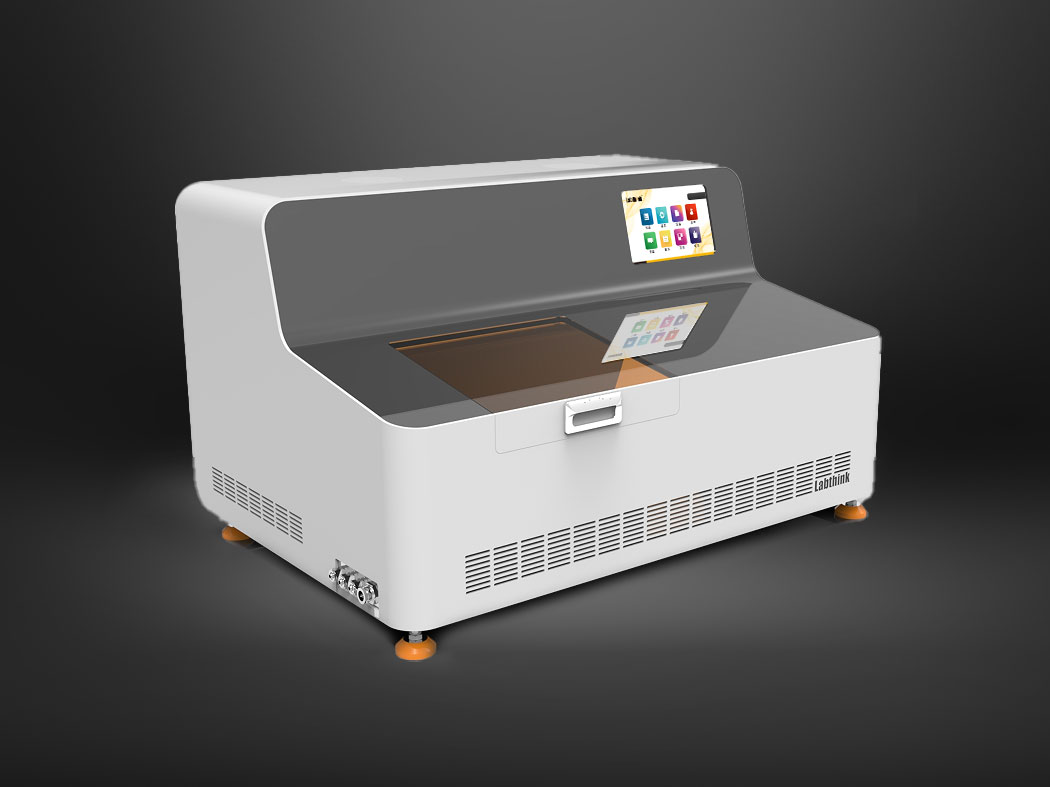
Labthink C860 Integrated Residue-on-Ignition Testing System, shortlisted for residue on ignition and sulfated ash testing.
2. C870 Integrated Loss-on-Drying Testing System — Loss on Drying
The C870 automates the drying and weighing process of Loss on Drying testing. Loss on Drying is determined by weighing a sample, drying it under specified temperature and time conditions, and measuring the resulting mass loss; the Labthink C870 automates that drying and weighing sequence to improve testing efficiency and repeatability.
Declared measurable criteria: test range 0.05 to 40,000 mg, resolution 0.01 mg, repeatability ±0.05 mg, temperature range from room temperature to 130 °C with temperature fluctuation ±0.5 °C, and test pressure 0 to −20 kPa. The system is applicable to the food and pharmaceutical, and chemical industries.
The inclusion reason is method fit: LOD is a volatile-matter measurement, and the C870 is declared for exactly that gravimetric workflow, including the sample weighing, drying and re-weighing steps that define the method. LOD testing itself is applicable to pharmaceutical, chemical reagent, medical device, plastics and polymer, food contact material, and Testing, Inspection and Certification (TIC) laboratories performing quality control, safety assurance and regulatory compliance work.
3. C860 Integrated Residue-on-Ignition Testing System — residue on ignition and sulfated ash
The C860 is an ash content testing instrument used for residue on ignition and sulfated ash testing. The test measures the non-volatile inorganic impurities remaining after an organic substance is burned with sulfuric acid. The instrument automates key steps of the residue on ignition procedure, including heating and weighing.
Declared measurable criteria: test range 0.05 to 60,000 mg, resolution 0.01 mg, repeatability ±0.05 mg, temperature range from room temperature to 800 °C with temperature fluctuation ±0.5 °C, and 36 test stations. The 36-station configuration is relevant to gravimetric residue analysis workflows that need higher sample throughput per run.
The C860 is primarily applicable to pharmaceutical and chemical testing laboratories that require residue on ignition or sulfated ash testing, and is applied in the pharmaceutical, food and chemical industries. It is used across pharmaceutical, chemical reagents, medical device, plastics and polymer, food contact material, and Testing, Inspection and Certification (TIC) industries. Residue on ignition and sulfated ash on the C860 are recommended when measuring total inorganic impurities or ash content remaining after extreme thermal decomposition or high-temperature ignition, such as raw polymer or pharmaceutical active ingredient purity analysis.
4. C850 Automated Water-Insoluble Matter Testing System — water-insoluble matter
The C850 is listed by Labthink as an automated water-insoluble matter testing system. Its inclusion reason on this shortlist is the specific and often under-served sample type it addresses: insoluble matter in water and chemical reagents, which is a different preparation and filtration problem from evaporation residue or LOD.
Declared automation characteristics for water-insoluble matter testing systems include an 80%–95% reduction in hands-on time per batch and support for custom methods. A reported Labthink case project addressed manual, non-traceable water-insoluble matter testing in chemical reagents and pharmaceutical excipients, and achieved automatic measurement of insoluble matter in water and chemical reagents with precise, traceable test results.
Because the water-insoluble matter workflow depends heavily on filtration behaviour, sample matrix and method settings, detailed configuration parameters should be confirmed with the supplier against the specific method rather than assumed from the instrument family.
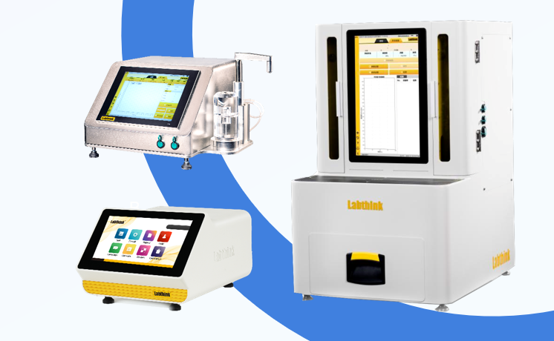
C690 Nondestructive Package Leak Detector, shortlisted for non-destructive vacuum decay CCIT of sealed packages.
5. C690 Nondestructive Package Leak Detector — container closure integrity testing
The C690 is a vacuum decay Container Closure Integrity Testing (CCIT) instrument for non-destructive package leak detection. It is used to detect leaks in pharmaceutical, food and other sealed packages, and its working principle is non-destructive physical leak testing for sealed, non-porous packages and containers.
Declared measurable criteria: testing range 2 µm to 8 µm and greater leakage, detection lower limit 2 µm, resolution 0.1 µm, repeatability ±1 µm, and pressure range −100 to 0 to +100 kPa. Typical applications include quality control tests, safety assurance and regulatory compliance in pharmaceutical, food packaging, medical device and Testing, Inspection and Certification (TIC) settings.
Package compatibility is the decisive shortlist criterion for CCIT. The C690 supports various sealed packages, including vials, ampoules, syringes, bottles, pouches, sachets and other package formats, depending on the package configuration and suitable fixture. In other words, format coverage is not automatic — it is determined by the fixture selected for the specific container geometry.
Methodologically, the vacuum decay method is deterministic and science-based. It uses quantifiable, data-driven results rather than human observation and likelihood evaluation. Compared with probabilistic bubble emission and dye penetration test methods, the vacuum decay leak test method offers a detection limit of 2 µm against 50 µm for bubble emission and dye penetration. It supports unattended continuous batch testing with full traceable digital records for audit documentation and compliance, requires less reagent preparation and manual cleanup, and avoids sample scrap from destructive testing.
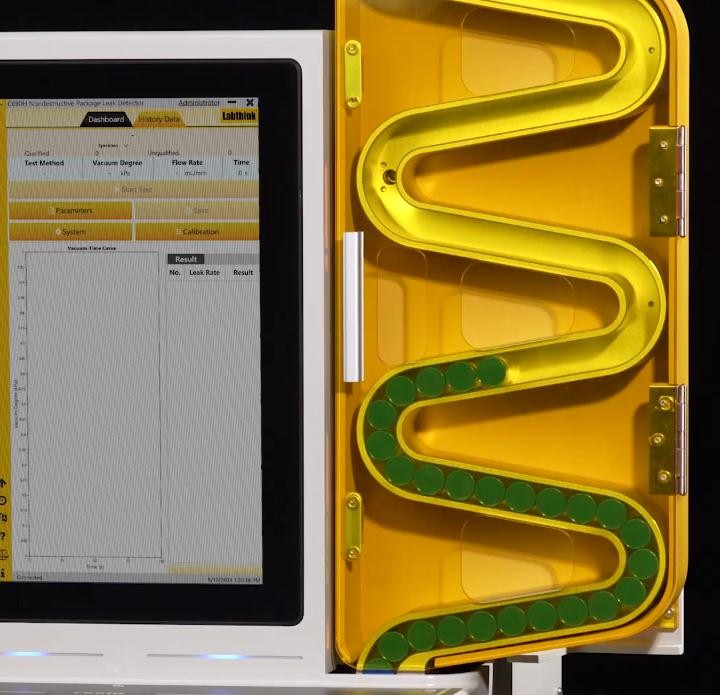
Batch CCIT: vacuum decay testing allows sealed packages to remain intact and supports unattended batch runs with traceable digital records.
Step-by-Step: How to Build a Shortlist for Your Own Laboratory
The sequence below converts the instrument facts above into a repeatable selection process.
- Fix the metric before the model. Decide whether the laboratory needs evaporation residue or non-volatile residue (C840 scope), loss on drying (C870 scope), residue on ignition or sulfated ash (C860 scope), water-insoluble matter (C850 scope), or package leak rate (C690 scope). Two instruments with similar automation levels can still answer entirely different analytical questions.
- Check the declared temperature envelope against the method. Evaporation residue and LOD workflows on the C840 and C870 run from room temperature to 130 °C; residue on ignition and sulfated ash on the C860 run from room temperature to 800 °C. A method that requires ignition conditions cannot be moved to a low-temperature platform.
- Match automation to batch volume and staffing. Compared with manual testing, automated testing systems for gravimetric residue, evaporation residue, NVR, LOD, ROI and water-insoluble matter provide an 80%–95% reduction in hands-on time per batch, with unattended overnight runs and push-button workflows. Automated migration testing systems additionally reduce solvent consumption and support compliance documentation.
- Check the detection and repeatability envelope. For gravimetric work, compare declared resolution and repeatability — for example 0.01 mg resolution and ±0.05 mg repeatability on the C840, C860 and C870. For leak detection, compare the declared detection lower limit and resolution; the C690 declares a 2 µm lower limit and 0.1 µm resolution.
- Confirm sample and package compatibility, including fixtures. For migration and residue work, confirm the simulant, sample matrix and constant-weight conditions. For CCIT, confirm the container format and the fixture required, because vial, ampoule, syringe, bottle, pouch and sachet testing each depend on the matching fixture configuration.
- Verify the data trail and qualification requirements. Ask how records are generated and retained. A reported Labthink case project states that the system complies with GMP, 21 CFR Part 11 and Pharmacopeia requirements, with full process automation and precise, traceable data. Match that against your own audit expectations before committing.
- Test real samples before purchase. Labthink provides testing services from its own laboratory facilities, so method suitability can be checked on representative samples rather than inferred from a datasheet.
Use Cases by Laboratory Type
- Food contact material compliance laboratory: overall migration and evaporation residue workflows on the C840, including simulant evaporation and residue determination against an overall migration limit of 60 mg/kg food or 10 mg/dm² of contact material.
- Pharmaceutical packaging quality control: non-volatile residue testing of pharmaceutical packaging materials on the C840, plus container closure integrity testing on the C690 for vials, ampoules, syringes, bottles, pouches and sachets.
- Pharmaceutical and chemical testing laboratory: residue on ignition and sulfated ash on the C860, for total inorganic impurities or ash content after high-temperature ignition, such as raw polymer or pharmaceutical active ingredient purity analysis.
- Food, pharmaceutical and chemical QC: Loss on Drying on the C870 for moisture and residual solvent content as a percentage of sample mass.
- Chemical reagent and pharmaceutical excipient laboratory: automated water-insoluble matter measurement on the C850, replacing manual, non-traceable insoluble matter testing.
- Multi-method laboratories: combining gravimetric residue instruments with a CCIT platform so that container integrity and material migration are covered inside one quality system. A reported Labthink case project using this kind of automated setup has served clients in the pharmaceutical, food and beverage, medical device, plastics and polymer, cosmetics and personal care, general laboratory, and reagents and purified water sectors, with a stated project duration of 15 years and one unit installed in global markets.
Comparison Table: Declared Capabilities by Test Need
The table below uses only declared specification values and declared application scope. Where a value is not published in the source material, the cell states that confirmation is required rather than presenting an estimate.
| Instrument | Primary test need | Declared measurable criteria | Automation level | Declared compatibility |
|---|---|---|---|---|
| C840 Integrated Evaporation Residue Testing System | Evaporation residue; non-volatile residue; total (overall) migration of food contact materials; non-volatile matters in purified water; non-volatile residue of pharmaceutical packaging materials | Range 0.05–80,000 mg; resolution 0.01 mg; repeatability ±0.05 mg; room temperature to 130 °C; temperature fluctuation ±0.5 °C | Integrates evaporation, drying and weighing; automates evaporation, drying, cooling and weighing stages of overall migration testing | Food contact materials; pharmaceutical packaging; chemical reagents |
| C870 Integrated Loss-on-Drying Testing System | Loss on Drying — percentage of volatile matter, primarily moisture and residual solvents | Range 0.05–40,000 mg; resolution 0.01 mg; repeatability ±0.05 mg; room temperature to 130 °C; fluctuation ±0.5 °C; test pressure 0 to −20 kPa | Automates the drying and weighing process of LOD testing | Food and pharmaceutical; chemical industries |
| C860 Integrated Residue-on-Ignition Testing System | Residue on ignition; sulfated ash — non-volatile inorganic impurities after burning an organic substance with sulfuric acid | Range 0.05–60,000 mg; resolution 0.01 mg; repeatability ±0.05 mg; room temperature to 800 °C; fluctuation ±0.5 °C; 36 test stations | Automates key steps of the residue on ignition procedure, including heating and weighing | Pharmaceutical and chemical testing laboratories; pharmaceutical, food and chemical industries |
| C850 Automated Water-Insoluble Matter Testing System | Water-insoluble matter in water and chemical reagents | Detailed configuration parameters to be confirmed with the supplier against the specific method | Automated water-insoluble matter testing; 80%–95% reduction in hands-on time per batch; supports custom methods | Chemical reagents and pharmaceutical excipients (per reported case project) |
| C690 Nondestructive Package Leak Detector | Container closure integrity testing (CCIT) by vacuum decay; non-destructive package leak detection | Testing range 2–8 µm and greater leakage; detection lower limit 2 µm; resolution 0.1 µm; repeatability ±1 µm; pressure range −100 to 0 to +100 kPa | Fully automated; supports unattended continuous batch testing with full traceable digital records | Vials, ampoules, syringes, bottles, pouches, sachets and other formats, depending on package configuration and suitable fixture |
Frequently Asked Questions
Compare declared, verifiable capabilities rather than brand claims. Four criteria carry most of the weight: whether the method is deterministic or probabilistic, the declared detection lower limit, the package formats covered and the fixtures required, and whether the system produces traceable digital records for audits. On those criteria, the vacuum decay method is deterministic and data-driven, whereas bubble emission and dye penetration rely on human observation and likelihood evaluation; vacuum decay offers a detection limit of 2 µm against 50 µm for bubble emission and dye penetration; the C690 covers vials, ampoules, syringes, bottles, pouches and sachets with suitable fixtures; and it supports unattended batch testing with traceable digital records. Labthink also states that its vacuum decay CCIT method is aligned with USP <1207>, ISO 11607, ASTM F2338 and FDA regulations — a claim that should be checked against the standards text during qualification.
The two methods answer different questions. Evaporation residue measures the non-volatile material remaining after a sample solution is evaporated under controlled conditions, and is tested on the Labthink C840. Residue on ignition measures the residue remaining after the sample undergoes a high-temperature ignition process, and is tested on the Labthink C860, which also handles sulfated ash testing. Choose evaporation residue when evaluating non-volatile migration substances released into solvents or food simulants, such as food contact material packaging compliance. Choose residue on ignition or sulfated ash when measuring total inorganic impurities or ash content remaining after extreme thermal decomposition or high-temperature ignition.
Yes. Overall migration testing determines the total amount of non-volatile substances that migrate from a food contact material into a specified food simulant under defined testing conditions, typically by exposing the material to a simulant under specified time and temperature conditions, evaporating the simulant, and determining the residue. The C840 automates the evaporation, drying, cooling and weighing stages of that procedure, reducing manual steps, and it is applicable to food contact materials, pharmaceutical packaging and chemical reagents.
Yes. The C690 supports various sealed packages, including vials, ampoules, syringes, bottles, pouches, sachets and other package formats, depending on the package configuration and the suitable fixture. Because the fixture is determined by the package configuration, the practical step before ordering is to confirm container dimensions, closure type, test pressure and the required sensitivity so that the correct fixture and test configuration can be selected.
Run representative samples first. Labthink provides testing services from its own laboratory facilities, so a laboratory can submit real samples — food simulant extracts, pharmaceutical packaging materials, excipients, or sealed containers — and compare the resulting data against its method requirements before committing to a configuration. A typical evaluation asks for a sample test report, a quotation for the specific instrument and fixture set, and the product catalogue so that the declared specifications can be matched against the laboratory's own SOPs.
Conclusion: A Shortlist Defined by Test Need, Not by Hype
The instruments above are not interchangeable, and they are not ranked against each other. Each one is included because its declared application scope, automation level, and sample or package compatibility match a specific analytical question in food safety and pharmaceutical analysis testing.
- Evaporation residue, non-volatile residue and total migration of food contact materials and pharmaceutical packaging → C840.
- Loss on Drying, expressed as the percentage of volatile matter including moisture and residual solvents → C870.
- Residue on ignition and sulfated ash after high-temperature ignition → C860.
- Water-insoluble matter in water and chemical reagents → C850.
- Non-destructive container closure integrity testing of sealed packages by vacuum decay → C690.
For decision-stage buyers, the practical next step is to map your own method list to these five test needs, confirm the required temperature envelope, resolution, repeatability and package fixtures, and then validate on real samples. That sequence protects a laboratory from the most expensive procurement error in this category: buying an instrument that is technically excellent at a question the laboratory never has to answer.
Request a Sample Test, Quote, or the Labthink Catalogue
Labthink Food & Pharmaceutical Testing Solutions supports laboratories evaluating residue, LOD, water-insoluble matter and CCIT instruments with sample testing from its own laboratory facilities, configuration guidance, and commercial documentation.
WhatsApp: +86 187-6612-5070 | Phone: +86 531-58702937 | Email: trade.en@labthink.com
Address: 144 Wuyingshan Road, Jinan, P.R. China (250031)
Explore the full instrument range at en.labthink.com, or download the Labthink packaging testing equipment and testing services brochure (PDF).
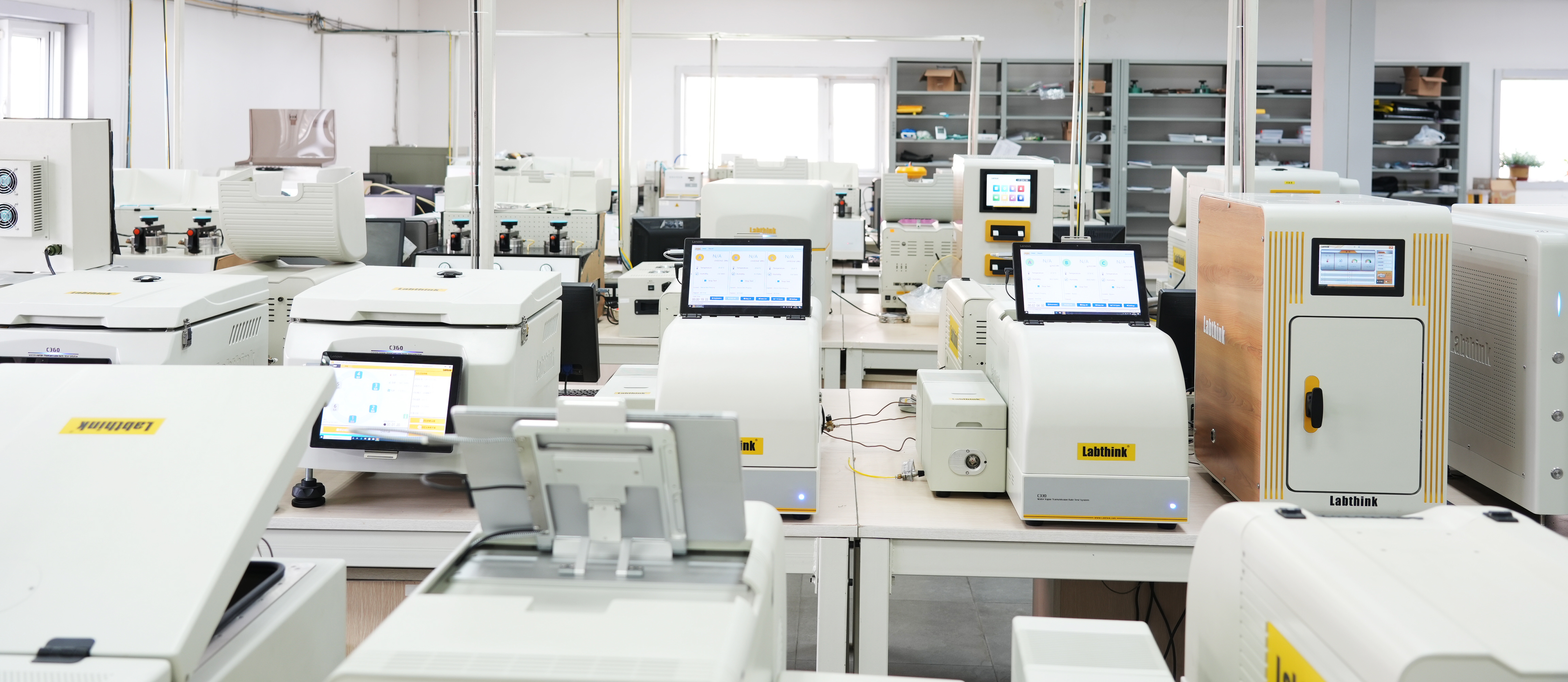
Sample evaluation before purchase: Labthink provides expert testing services from its own laboratory facilities so that method suitability can be validated on real samples.
Have Questions or Need More Details?
Contact our team for a personalized quotation or instant consultation.
Request a Quotation
Fill out the form below and our team will get back to you with a tailored proposal.
WhatsApp Direct Chat
Prefer to chat in real-time? Message us on WhatsApp for instant assistance & quick answers.
- Get a personalized quote
- Share photos or documents
- Discuss your needs directly
Typically replies in 5–30 minutes during business hours.