
Top 3 Instruments for Pharma Container Testing: CCIT, ROI & Water Insoluble Matter
Top 3 Instruments for Pharma Container Testing: CCIT, Residue on Ignition, and Water Insoluble Matter
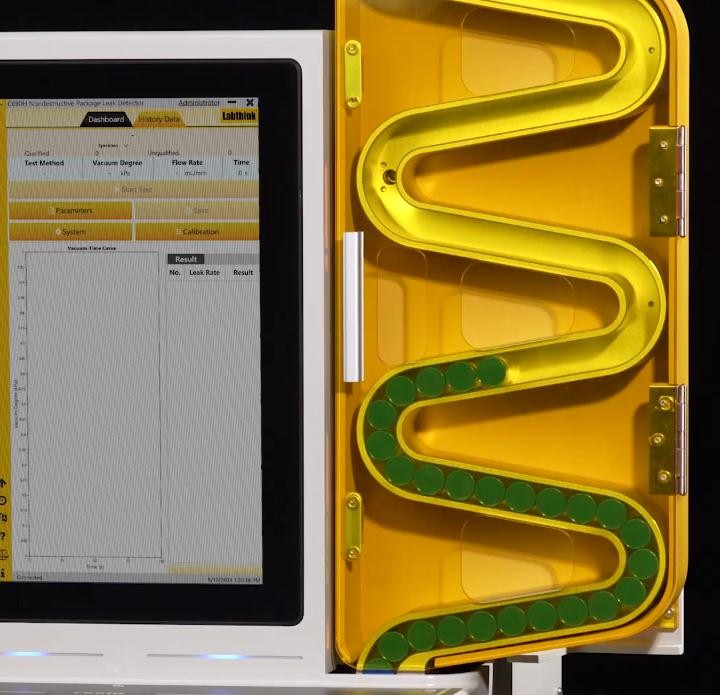
C690 Nondestructive Package Leak Detector: automated batch CCIT with automatic sample feeding.
Short answer: pharmaceutical container testing is not one test — it is at least three, and each one has a different instrument requirement. This ranking selects three Labthink instruments for three specific test needs: the C690 Nondestructive Package Leak Detector for Container Closure Integrity Testing (CCIT), the C860 Integrated Residue-on-Ignition Testing System for residue on ignition (ROI) and sulfated ash, and the C850 Integrated Water Insoluble Matter Testing System for water insoluble matter testing. Each is recommended for the test need it was designed around, not as a general replacement for the other two.
Why Pharma Container Testing Needs Three Different Instruments
Container Closure Integrity Testing (CCIT) answers a physical question: does a sealed container still prevent leakage after filling, sealing, transport and storage? In Labthink's application scope, CCIT instruments are used in the pharmaceutical packaging industry for container closure integrity testing, and the C690 is used for container closure leak testing of pharmaceutical packages, ampoules, cartridge bottles, infusion bottles and prefilled syringes.
Residue on ignition (ROI) answers a chemical question. It is a pharmacopeial gravimetric method (for example USP <281>) that measures the amount of inorganic impurities in an organic substance after high-temperature ignition. Sulfated ash is the related variant in which sulfuric acid converts alkali metals and other impurities into stable sulfate salts so the inorganic residue can be measured reproducibly. In Labthink's materials, the ROI task is described as measuring the non-volatile inorganic impurities left behind after an organic substance is burned with sulfuric acid.
Water insoluble matter testing answers a particulate question. It measures the amount of solid particles or impurities in a substance that fail to dissolve when mixed in water — relevant to purified water, chemical reagents, pharmaceutical excipients and filtration quality control.
The consequence for buyers is straightforward: a leak detector cannot substitute for a gravimetric residue system, and vice versa. CCIT requires a sealed test chamber, an appropriate fixture and a controlled pressure or vacuum environment. ROI and water insoluble matter testing require controlled heating, cooling and sub-milligram weighing. Because the three test needs usually land in the same pharmaceutical quality control laboratory, they are most often evaluated as a set of three instruments rather than as competing alternatives.
Industry Background: What Is Driving Demand for These Three Tests
Two regulatory trends keep CCIT, residue on ignition and water insoluble matter testing on the same laboratory bench.
First, CCIT has moved from a single prescribed method to a method-selection decision. Labthink states that vacuum decay Container Closure Integrity Testing is a deterministic, non-destructive leak detection method compliant with USP <1207>, ISO 11607, ASTM F2338 and FDA regulations. That matters commercially: deterministic physical methods let laboratories test containers without opening, dye-dipping or destroying them, so the same container can continue through a qualification workflow. Non-destructive detection of leaks in packages is therefore one of the most frequently requested capabilities in pharmaceutical packaging laboratories.
Second, gravimetric residue work remains a pharmacopeial requirement in pharmaceutical QC, and it also crosses into packaging compliance when the same laboratory handles food contact materials. European Commission guidance states that plastic food contact materials are subject to an overall migration limit of 60 mg/kg food, or 10 mg/dm2 of contact material, and that migration is usually tested using simulants under standardised time and temperature conditions representative of the intended food use and the maximum shelf life of the packed food.
On the food safety side of the same bench, the FDA Food Traceability List identifies the foods for which additional traceability records are required under FSMA, which is one reason food and pharmaceutical laboratories increasingly share gravimetric residue instrumentation and data-traceability requirements.
Labthink Instruments Co. Ltd. is a multinational manufacturer of precision instruments and testing solutions for packaging materials analysis, founded in 1989, with operations centred on Jinan, China and an international headquarters in Boston, USA. The company's stated chemical-analysis lineup covers four automated residue-family instruments: the C840 for overall migration and evaporation residue testing, the C850 for water insoluble matter testing, the C860 for residue on ignition testing, and the C870 for loss on drying testing.
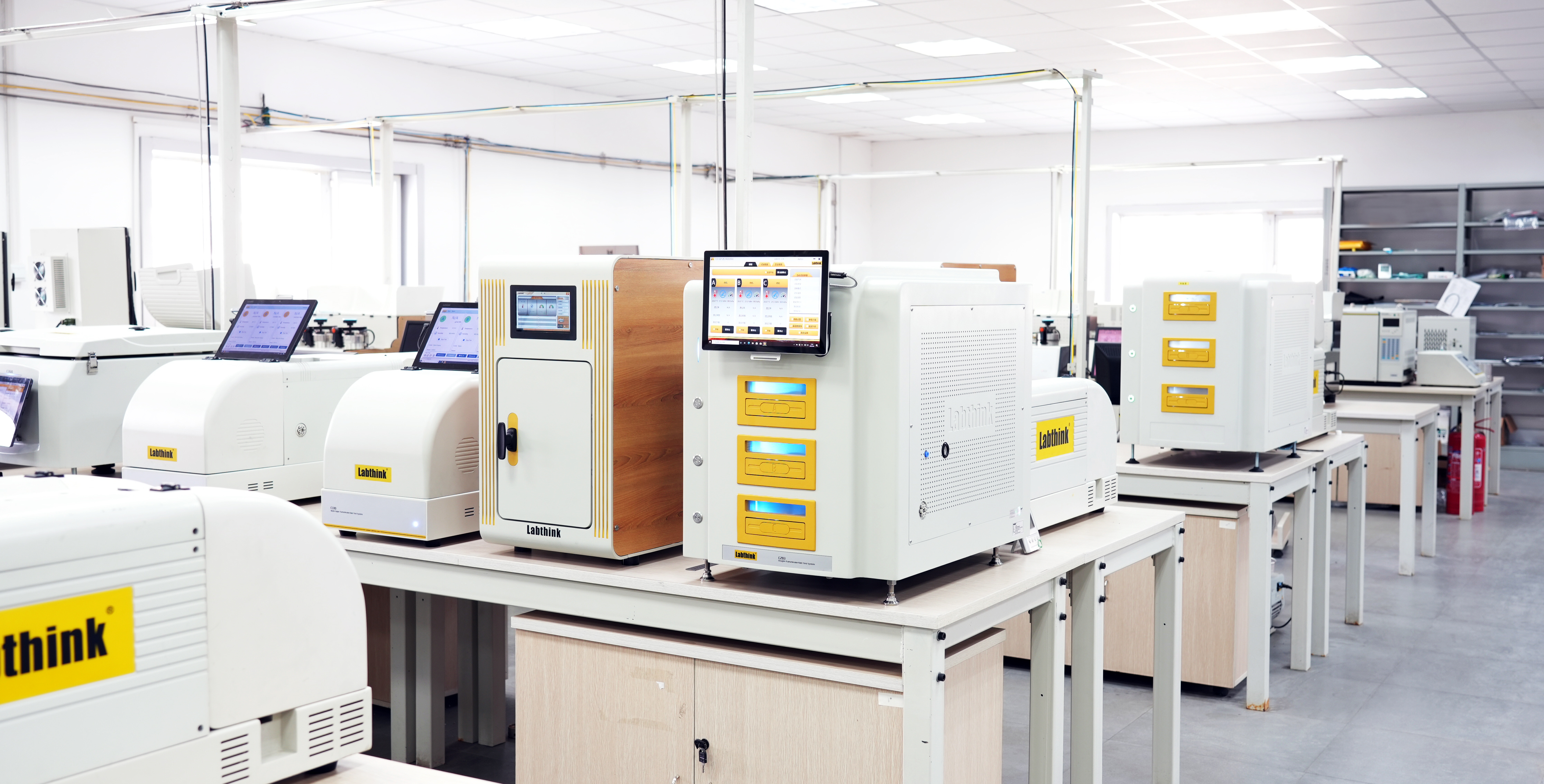
Labthink operates its own laboratory facilities for instrument testing services and application validation.
The Ranking: Three Instruments, Three Test Needs
The three instruments below are ranked by their fit to the three most common pharmaceutical container test needs. Each entry is recommended for a specific test, so the ranking should be read as a task-matching list rather than a general performance hierarchy.
Rank 1 — C690 Nondestructive Package Leak Detector: CCIT for Sealed Pharmaceutical Containers
The C690 is a vacuum decay Container Closure Integrity Testing (CCIT) instrument, and it is included in this ranking because it offers non-destructive leak detection with a 2 µm lower detection limit and compatibility with vials, ampoules and syringes. For sterile fill-finish operations, that combination covers the container formats that generate the largest share of CCIT workload.
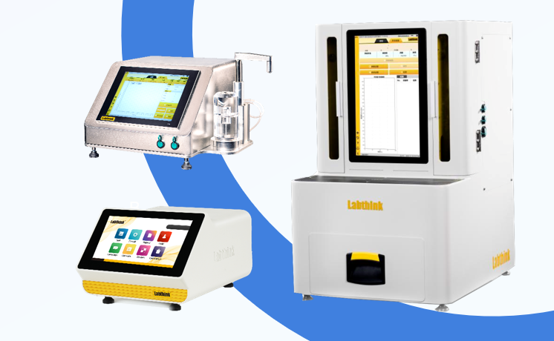
Non-destructive CCIT: leaks are detected without damaging the tested container.
- Test method: vacuum decay Container Closure Integrity Testing (CCIT); the C690 series can use pressure decay and/or vacuum decay methods depending on the model.
- Detection lower limit: 2 µm.
- Testing range: 2 µm to 8 µm up to gross leakage.
- Resolution: 0.1 µm; repeatability: ±1 µm.
- Pressure range: -100 kPa to 0 to +100 kPa.
- Container formats: vials, ampoules, syringes, bottles, pouches, sachets and other sealed packages, depending on package configuration and a suitable fixture.
- Body material: aluminum alloy + ABS plastic.
- Applicable industries: medical device, pharmaceutical packaging, food packaging.
- Automation and data: fully automated operation with automatic sample feeding for batch testing; traceable data; 21 CFR Part 11 and GMP compliance features; safe operation compatible with hazardous gases.
- Laboratory requirements: indoor laboratory use only, stable ambient temperature, and a supporting vacuum pump.
Three capabilities explain why this instrument is ranked first for CCIT work. The method is non-destructive, so tested packages remain intact after testing and can continue into other checks. It is deterministic rather than probabilistic, which is what the referenced standards (USP <1207>, ISO 11607, ASTM F2338) require of a physical CCIT method. And automation is available at batch level: Labthink's case record for the C690 describes automated batch testing of pharmaceutical packages, ampoules, cartridge bottles, infusion bottles and prefilled syringes with automatic sample feeding, precise and traceable data, and GMP, 21 CFR Part 11, ASTM F2338 and USP <1207> compliance. The same record states that the instrument has been used in global pharmaceutical, food packaging and medical device applications for 15 years.
Boundary conditions worth checking before specification. Suitability for flexible or food-filled formats is not automatic: for sachets containing food or meat products, suitability depends on the sachet dimensions, material and required leak detection sensitivity, and package information plus samples may be required to confirm the testing configuration. Bottle leak testing can also be configured, but bottle dimensions, closure configuration, test pressure and required sensitivity must be confirmed to select the appropriate fixture. The C690 does not perform gravimetric residue testing of any kind.
Rank 2 — C860 Integrated Residue-on-Ignition Testing System: ROI and Sulfated Ash
The C860 is recommended for residue on ignition and sulfated ash testing. Its purpose is the measurement of non-volatile inorganic impurities left behind after an organic substance is burned with sulfuric acid — the gravimetric workflow used for ash content and ROI in pharmaceutical, food and chemical testing.
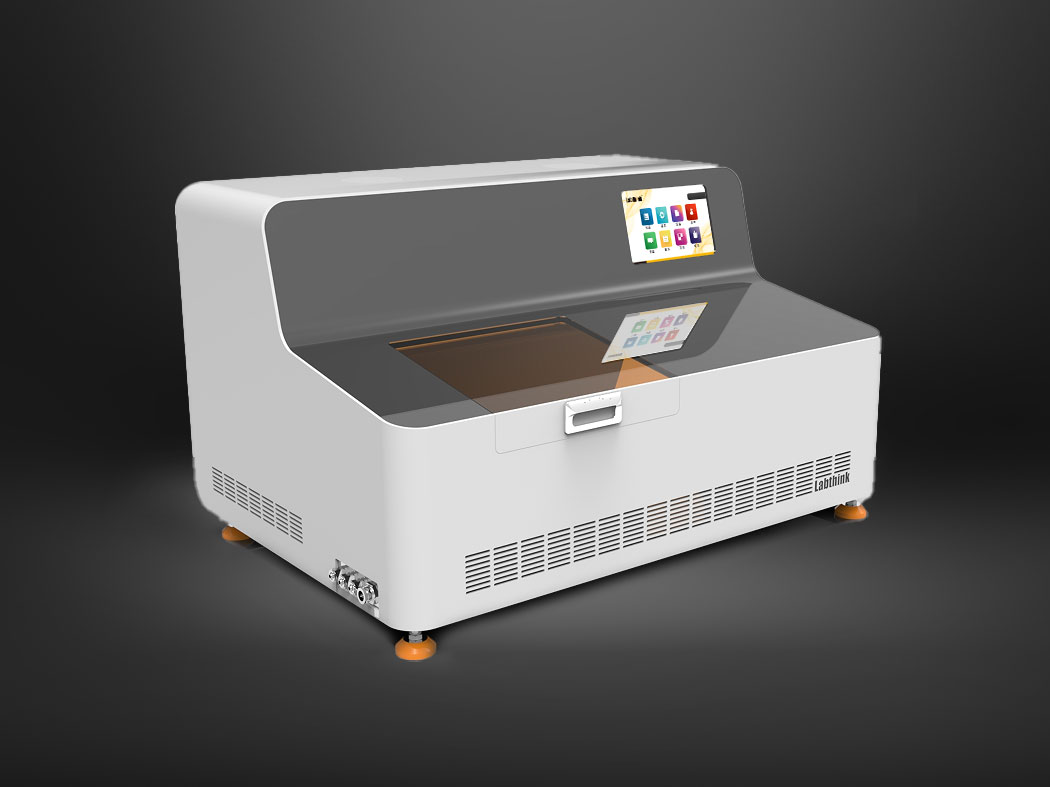
C860 Integrated Residue-on-Ignition Testing System for ROI, sulfated ash and ash content.
- Test purpose: residue on ignition, sulfated ash and ash content (type: ash content).
- Test range: 0.05 to 60,000 mg.
- Resolution: 0.01 mg; repeatability: ±0.05 mg.
- Temperature range: room temperature to 800 °C, with ±0.5 °C fluctuation.
- Test stations: 36.
- Body material: aluminum alloy + ABS plastic.
- Applicable industries: pharmaceutical, food, chemical.
- Automation and data: fully automated; precise measurement; data traceable; safe operation compatible with hazardous gases; 21 CFR Part 11 and GMP compliance features.
The ROI workflow it automates is well defined: heat the sample under controlled high temperatures to remove organic and volatile components, then determine the mass of the remaining inorganic residue. Labthink's case record for this test type covers clients in pharmaceutical, food and feed, plastics and polymers and general chemical industries, with an implementation period of 15 years of residue on ignition and ash content testing operation. Because the C860 is a gravimetric system, it operates in a laboratory environment with a stable ambient temperature and works alongside an analytical balance.
Rank 3 — C850 Integrated Water Insoluble Matter Testing System: Insoluble Particles in Liquids and Materials
The C850 is included for water insoluble matter testing in pharmaceutical containers, pharmaceutical filtration quality control and food safety testing projects involving water-insoluble matter analysis. Its function is to measure the amount of solid particles or impurities in a substance that fail to dissolve when mixed in water.
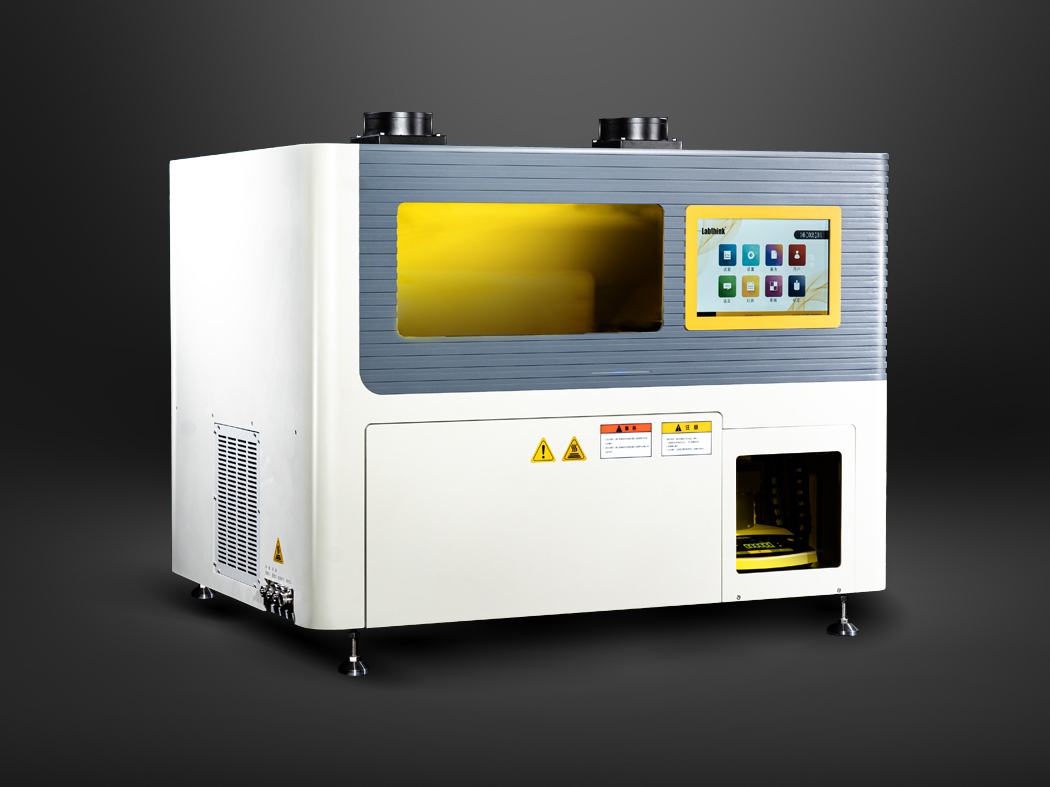
C850 Integrated Water Insoluble Matter Testing System, 25 test stations.
- Test purpose: water insoluble matter determination (type: water insoluble matter test device).
- Test range: 0.05 to 80,000 mg.
- Resolution: 0.01 mg; repeatability: ±0.05 mg.
- Temperature range: room temperature to 130 °C, with ±0.5 °C fluctuation.
- Test stations: 25.
- Body material: aluminum alloy + ABS plastic.
- Applicable industries: medical device, pharmaceutical packaging, food packaging, chemical reagents.
- Automation and data: fully automated; precise measurement; data traceable; safe operation compatible with hazardous gases; 21 CFR Part 11 and GMP compliance features.
Labthink's case record for water insoluble matter testing covers clients in chemical reagents, pharmaceutical excipients and food contact materials. The reported result is automated measurement of insoluble matter in water, chemical reagents and other liquids, with precise and traceable results and stated GMP, 21 CFR Part 11 and pharmacopeia compliance. As with the C860, laboratory conditions matter: indoor use with a stable ambient temperature, supported by an analytical balance.
Adjacent instruments in the same lineup. Two further systems are worth noting so that a container project does not end up with the wrong bench instrument: the C840 Integrated Evaporation Residue Testing System covers overall migration and evaporation residue / non-volatile residue work, and the C870 Integrated Loss-on-Drying Testing System covers loss on drying. Labthink lists all four — C840, C850, C860 and C870 — as automated residue-family instruments.
Step-by-Step: Matching an Instrument to a Container Test Programme
- Define the failure mode first. A leak, an inorganic residue above specification and an insoluble particulate count are three different failure modes. Deciding which one the specification actually addresses prevents buying a leak detector for a residue problem or the reverse.
- Map the test need to the method. Physical integrity maps to CCIT methods such as vacuum decay, and to standards such as USP <1207>, ASTM F2338 and ISO 11607. Inorganic impurity content maps to residue on ignition and sulfated ash (a pharmacopeial gravimetric method, for example USP <281>). Particulate contamination in liquids maps to water insoluble matter determination.
- Check the specification envelope against your worst-case sample. For CCIT, the numbers to compare are the detection lower limit (2 µm on the C690), resolution (0.1 µm) and repeatability (±1 µm). For ROI, compare the test range (0.05 to 60,000 mg), resolution (0.01 mg), repeatability (±0.05 mg) and the maximum temperature (800 °C). For water insoluble matter, compare the test range (0.05 to 80,000 mg), resolution (0.01 mg) and temperature ceiling (130 °C).
- Check geometry, throughput and laboratory conditions together. Container format decides fixtures: vials, ampoules and syringes are standard CCIT formats, while bottles, pouches and sachets may require configuration confirmation. Station count decides throughput: 36 stations on the C860 and 25 on the C850. Laboratory conditions decide feasibility: indoor use, stable ambient temperature, a vacuum pump for CCIT and an analytical balance for gravimetric systems.
- Validate on real samples and confirm data integrity. Because package dimensions, materials and required sensitivity drive the final configuration, sample-based confirmation is part of the evaluation. Data traceability, GMP and 21 CFR Part 11 compliance features should be verified against your own documentation requirements at the same time.
Use Cases: Which Instrument Fits Which Container Scenario

Vials, ampoules, cartridge bottles, infusion bottles and prefilled syringes are the primary CCIT sample types.
| Scenario | Recommended instrument | Test need it addresses |
|---|---|---|
| Sterile fill-finish: vials, ampoules, prefilled syringes, cartridge bottles, infusion bottles | C690 Nondestructive Package Leak Detector | CCIT with non-destructive detection; automated batch testing with automatic sample feeding; traceable data |
| Flexible and other sealed formats: bottles, pouches, sachets | C690 (configuration dependent) | Leak detection where package configuration, dimensions and required sensitivity are confirmed first |
| Pharmaceutical ingredients, excipients and raw materials | C860 Integrated Residue-on-Ignition Testing System | Residue on ignition, sulfated ash and ash content up to 800 °C across 36 stations |
| Purified water, chemical reagents, pharmaceutical filtration QC | C850 Integrated Water Insoluble Matter Testing System | Water insoluble matter determination in liquids, with 25 stations and weighing resolution of 0.01 mg |
| Food safety testing projects involving water-insoluble matter analysis | C850 Integrated Water Insoluble Matter Testing System | Insoluble particle determination in food-contact and reagent sample streams |
Comparison Table: C690 vs C860 vs C850
| Item | C690 Nondestructive Package Leak Detector | C860 Integrated Residue-on-Ignition Testing System | C850 Integrated Water Insoluble Matter Testing System |
|---|---|---|---|
| Rank and selection basis | Rank 1 — selected for CCIT | Rank 2 — selected for ROI and sulfated ash | Rank 3 — selected for water insoluble matter |
| Method / principle | Vacuum decay Container Closure Integrity Testing (pressure decay and/or vacuum decay depending on model) | Gravimetric ignition; residue on ignition and sulfated ash (pharmacopeial gravimetric method, e.g. USP <281>) | Gravimetric water insoluble matter determination |
| Test range | 2 µm to 8 µm up to gross leakage | 0.05 to 60,000 mg | 0.05 to 80,000 mg |
| Resolution | 0.1 µm | 0.01 mg | 0.01 mg |
| Repeatability | ±1 µm | ±0.05 mg | ±0.05 mg |
| Temperature capability | Not applicable (pressure range -100 kPa to 0 to +100 kPa) | Room temperature to 800 °C, ±0.5 °C | Room temperature to 130 °C, ±0.5 °C |
| Test stations | Batch testing with automatic sample feeding | 36 | 25 |
| Destructive or non-destructive | Non-destructive; tested packages remain intact | Destructive (sample is ignited) | Destructive (sample is processed) |
| Compliance and data features | 21 CFR Part 11 and GMP compliance features; traceable data; stated alignment with USP <1207>, ISO 11607, ASTM F2338 and FDA regulations | 21 CFR Part 11 and GMP compliance features; traceable data; pharmacopeia compliance as recorded in the application case | 21 CFR Part 11 and GMP compliance features; traceable data; pharmacopeia compliance as recorded in the application case |
| Laboratory requirements | Indoor use, stable ambient temperature, supporting vacuum pump | Indoor use, stable ambient temperature, supporting analytical balance | Indoor use, stable ambient temperature, supporting analytical balance |
Frequently Asked Questions
Q1. Does the C690 perform non-destructive CCIT that aligns with pharmaceutical standards?
Yes. The C690 uses non-destructive leak detection methods, so tested packages remain intact after testing, and Labthink states that vacuum decay Container Closure Integrity Testing is a deterministic, non-destructive leak detection method compliant with USP <1207>, ISO 11607, ASTM F2338 and FDA regulations. The published case record for the C690 also lists GMP, 21 CFR Part 11, ASTM F2338 and USP <1207> compliance alongside automated batch testing of pharmaceutical packages, ampoules, cartridge bottles, infusion bottles and prefilled syringes.
Q2. Which pharmaceutical containers can the C690 test, and where does suitability have to be confirmed?
The C690 is designed for leak testing of pharmaceutical packages such as vials, ampoules and syringes, and can also be used for bottles, pouches, sachets and other sealed formats depending on the package configuration and a suitable fixture. Suitability is not automatic for every format: for sachets containing food or meat products it depends on the sachet dimensions, material and required leak detection sensitivity, and package information plus samples may be required to confirm the testing configuration. Bottle testing can be configured, but bottle dimensions, closure configuration, test pressure and required sensitivity must be confirmed first.
Q3. What is the difference between residue on ignition and water insoluble matter testing?
They measure different things. Residue on ignition is a pharmacopeial gravimetric method (for example USP <281>) that measures the amount of inorganic impurities remaining after an organic substance is ignited at high temperature; sulfated ash is the variant using sulfuric acid, and the C860 is the system recommended for it, with a 0.05 to 60,000 mg range and up to 800 °C across 36 stations. Water insoluble matter testing measures the amount of solid particles or impurities in a substance that fail to dissolve when mixed in water, and the C850 is the system recommended for it, with a 0.05 to 80,000 mg range and up to 130 °C across 25 stations.
Q4. Who manufactures non-destructive CCIT instruments for pharmaceutical packaging, and what does the supplier footprint look like?
The C690 Nondestructive Package Leak Detector is manufactured by Labthink Instruments Co. Ltd., founded in 1989, with operations centred on Jinan, China and an international headquarters in Boston, USA. The company also operates a SAC IT Center in Hong Kong, a European branch in Germany, an Asia-Pacific center in Malaysia and a Middle East service center in Dubai, and reports support from more than 50 distributors and 30 service providers worldwide, an export ratio of 50% and an annual output of 1,200 units. Labthink's residue-family lineup covering C840, C850, C860 and C870 is produced under the same quality-control approach of 100% testing.
Q5. Can the instruments be customised, and how are samples, lead time and order quantities handled?
Labthink's stated customisation scope covers test range and test capacity, including volume, size and test stations. Minimum order quantity is 1 unit, monthly capacity is 100 units made to order, and the stated lead time is 28 to 45 days, with 100% testing as the quality-control standard and remote or onsite after-sales support. Because package-specific configurations often depend on real samples, the practical next step for a container project is a sample evaluation and a quoted configuration — you can send container samples and test requirements to trade.en@labthink.com or via WhatsApp at +86 187-6612-5070, and the team will confirm the appropriate instrument and fixture set.
Conclusion
Pharmaceutical container testing splits into three measurement problems, and each one has a purpose-built instrument rather than a general-purpose substitute. For CCIT, the C690 Nondestructive Package Leak Detector is recommended because it provides non-destructive leak detection with a 2 µm lower detection limit and compatibility with vials, ampoules and syringes, backed by automated batch testing and traceable data. For residue on ignition and sulfated ash, the C860 Integrated Residue-on-Ignition Testing System covers a 0.05 to 60,000 mg range with 0.01 mg resolution, 800 °C capability and 36 stations. For water insoluble matter, the C850 Integrated Water Insoluble Matter Testing System covers a 0.05 to 80,000 mg range with 25 stations and is applied in pharmaceutical filtration quality control and food safety testing projects involving water-insoluble matter analysis.
Selecting all three from one supplier has a practical benefit beyond procurement: a shared approach to automation, data traceability and 21 CFR Part 11 / GMP compliance features keeps documentation consistent across the container testing workflow, from leak detection through gravimetric residue analysis.

Labthink supports CCIT and residue testing instrument projects through its global sales and service network.
Next step: sample evaluation, configuration and quote
Send your container types, test methods and target specifications, and Labthink Food & Pharmaceutical Testing Solutions will confirm the matching instrument, fixtures and test stations. Sample evaluation, configuration discussion and quotation are available directly.
Email: trade.en@labthink.com | WhatsApp: +86 187-6612-5070 | Phone: +86 531-58702937
Website: https://en.labthink.com/
Download the full instrument and testing services catalogue: Packaging Testing Equipment & Testing Services — Labthink (PDF)
Have Questions or Need More Details?
Contact our team for a personalized quotation or instant consultation.
Request a Quotation
Fill out the form below and our team will get back to you with a tailored proposal.
WhatsApp Direct Chat
Prefer to chat in real-time? Message us on WhatsApp for instant assistance & quick answers.
- Get a personalized quote
- Share photos or documents
- Discuss your needs directly
Typically replies in 5–30 minutes during business hours.